
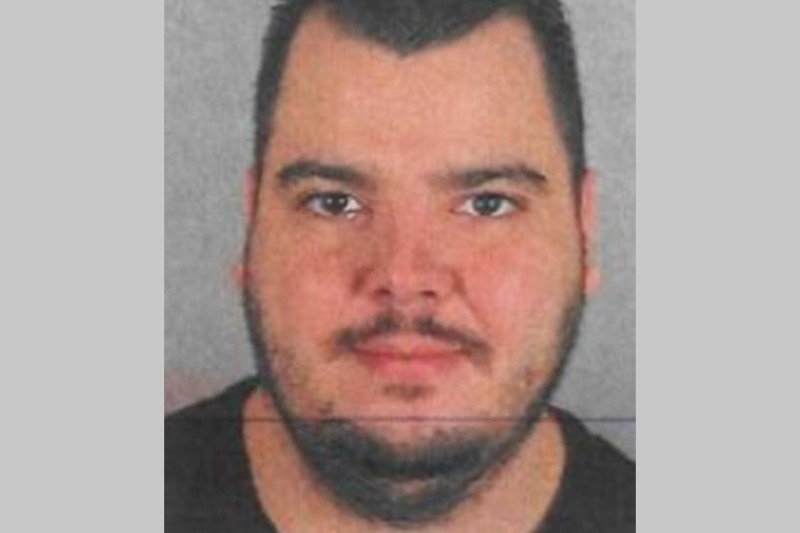
One of Europe’s most wanted fugitives — Dutch drug trafficker Joseph “Jos” Leijdekkers — organized the cocaine shipment seized in a record bust on the high seas last month, a Spanish law enforcement official told OCCRP.
The vessel was apprehended in international waters off the West African coast on May 1 by Spain’s Civil Guard. On board, officers found more than 30 tons of cocaine worth over $954 million, and arrested 23 people including Dutch, Surinamese and Philippines nationals.
Spanish Interior Minister Fernando Grande-Marlaska told reporters the bust was "one of the biggest, not only nationally but internationally.”
The cargo ship, called the Arconian, had set out from the Sierra Leonean capital of Freetown, according to a Spanish court document previously obtained by OCCRP. But until now, officials have not publicly said who they suspect was behind the cocaine shipment.
Spanish law enforcement believe it was organized by Leijdekkers, who is on the European Union’s most wanted list of fugitives and has a base in Sierra Leone.
“He is the one who [allegedly] set up the operation,” said Lieutenant Colonel Oscar Remacha, head of the Civil Guard's anti-drug trafficking department.
“He had those 30 tons stored in Sierra Leone, and he organized the transport and supplied the drugs,” Remacha alleged in an interview with OCCRP.
The Spanish court document does not list Leijdekkers among those charged in the case.
Leijdekkers’ lawyer confirmed by phone that he had received emailed questions about the Spanish allegations from OCCRP, but said: “I see no reason to respond."
Dutch authorities are offering a reward of 200,000 euros ($232,208) for tips leading to Leijdekkers’ arrest. A Netherlands court sentenced him in absentia in 2024 to 24 years in prison for drug trafficking, armed robbery, and ordering murder.
Dutch authorities have not been able to secure his extradition from Sierra Leone, where he is widely reported to be well connected with the country’s political and economic elite. Netherlands police this week said they had searched the homes of four crew members of the Arconian.
Last month’s news that the 30 tons of cocaine discovered on the Arconian had originated in Freetown only added to Sierra Leone’s growing reputation as a haven for drug traffickers like Leijdekkers.
The bust prompted Abdul Kargbo, leader of the opposition All People's Congress party, to write an open letter on May 10 to the country’s president, Julius Maada Bio. Kargbo referred to media reports about Sierra Leone’s role as a hub for cocaine trafficking, which has also been documented by organizations like the United Nations Office on Drugs and Crime.
Kargbo criticized “the prolonged silence and apparent hesitation by the Government of Sierra Leone in responding firmly and transparently to these matters,” and cited in particular the continued presence of Leijdekkers in the country.
Remacha, of the Spanish Civil Guard, said Leijdekkers appears to enjoy “total impunity, total confidence” in running trafficking operations out of Sierra Leone.
The Sierra Leone Police and the Internal Affairs Ministry did not respond to requests for comment before publication. The government in February announced 52 convictions related to drug trafficking and organized crime, saying they posed “a serious threat to national security.”
While the Arconian was on paper destined for the Libyan port of Benghazi, authorities say the real plan was to rendezvous with speedboats that would pick up packages of cocaine on the high seas and run them to the Spanish coast.
There has been a “recently increased use of high-speed boats” to move cocaine from cargo ships to the coast, rather than smuggle it in through ports, according to Remacha.
“We've seen so many videos and images of groups of these boats rafted together 150 miles off the coast, waiting to go out like they're at a taxi stand,” he said.
Remacha said the Civil Guard had information about a major upcoming shipment, and knew roughly where the cocaine would be shifted to speedboats. “The Civil Guard's maritime intelligence team analyzed dozens of ships until they detected the Arconian,” he said, adding that Dutch and U.S. law enforcement then confirmed the lead.
Remacha said Leijdekkers’ network had likely already used the same method to move drugs into Spain, and the Arconian was only their latest attempt.
“He knows getting it out of Sierra Leone is easy for him. After that, it's not normal for a ship on that specific itinerary to undergo any inspection unless it approaches a port,” Remacha said. “So he was quite confident he wouldn't get caught.”
Source: Original article