
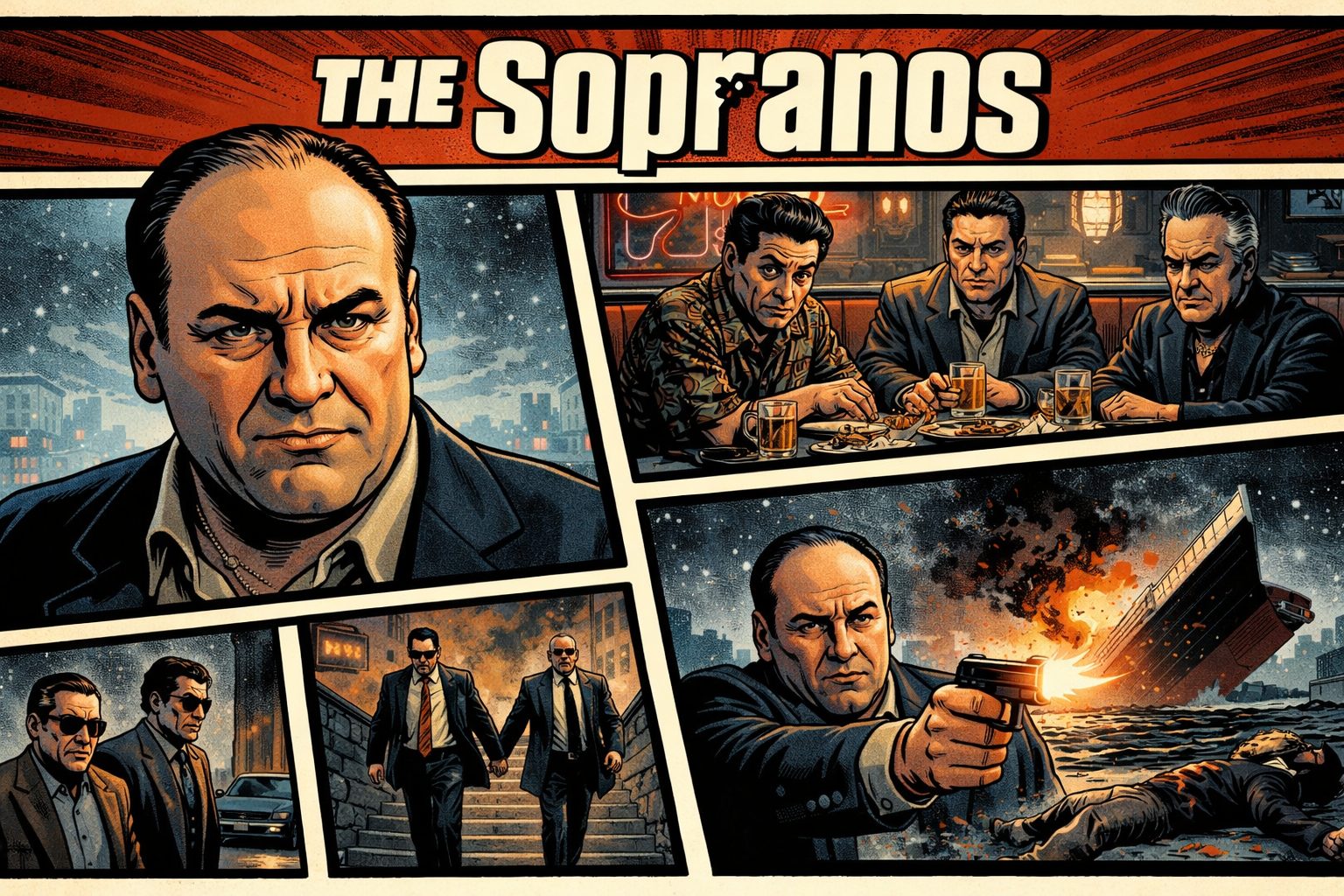

Few television series changed the language of modern drama as profoundly as The Sopranos. Created by David Chase and first released in 1999, the series is often praised as one of the greatest achievements in television history. It helped define what prestige television could be, but its importance goes beyond influence alone. What made The Sopranos revolutionary was not simply that it told a story about organized crime. It was that it turned that story inward, using crime not only as action, but as a way to explore anxiety, family, masculinity, guilt, and the private collapse hidden beneath public power.
A gangster at the center of domestic life
At the heart of the series is Tony Soprano, played by James Gandolfini in a performance of extraordinary complexity. Tony is a mafia boss, a husband, a father, a son, and a man struggling with panic attacks severe enough to send him into therapy. That premise alone was enough to make the series feel new. Instead of presenting a crime boss as distant myth, The Sopranos places him in kitchens, living rooms, doctor’s offices, and family arguments. The result is a portrait of power that feels intimate rather than glamorous.
Tony is dangerous, charismatic, funny, brutal, self-aware, and blind to himself all at once. The series refuses to simplify him into either monster or victim. That moral complexity became one of the show’s defining strengths. Viewers are invited to understand him, but never fully excuse him. The closer the series gets to Tony, the less romantic his world becomes.
Family as both refuge and prison
What gives The Sopranos its lasting emotional force is its understanding that crime and family are never separate worlds. Tony’s criminal life bleeds constantly into his domestic life, and his domestic frustrations feed directly into his violence. His relationship with Carmela, his children, and especially his mother creates some of the most painful and psychologically sharp material in the series. The show understands that the deepest wounds are often formed not through spectacular betrayal, but through repetition, resentment, silence, and emotional inheritance.
This is where The Sopranos becomes more than a mafia story. It is not simply i...